
Is Gajakesari Punugu Original Punugu? Let’s Understand the Difference Between Pure Punugu and Mixed Ingredients
October 15, 2026
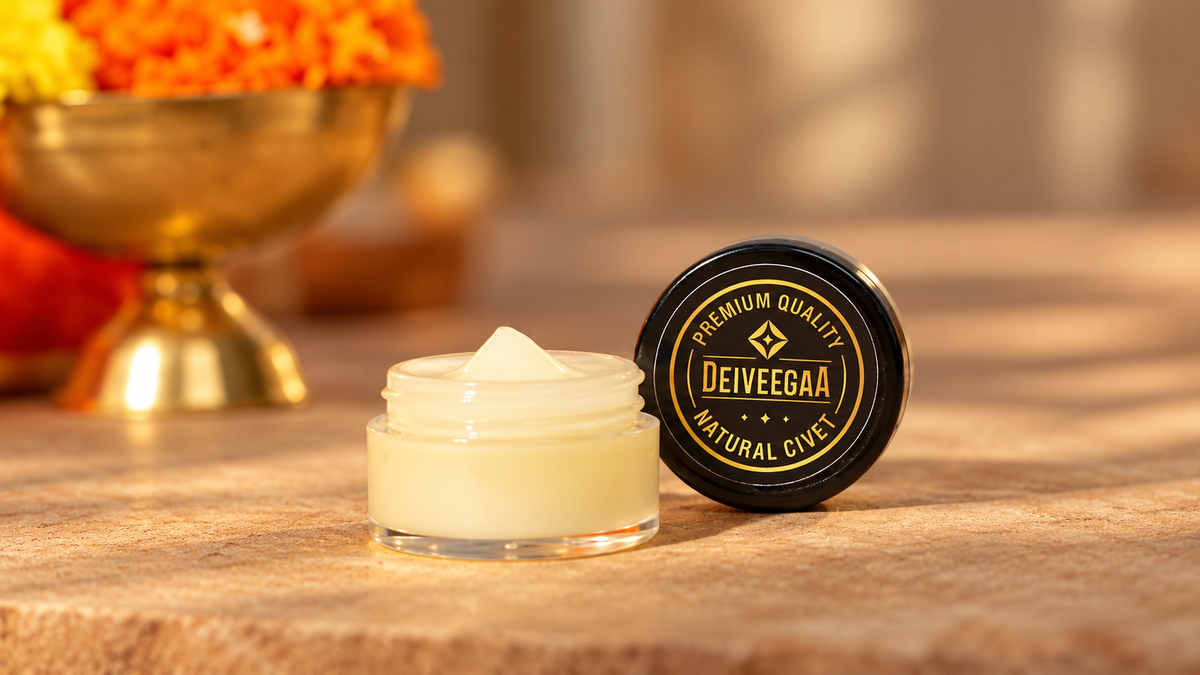
Whenever you do an online search for punugu, you will come across many products by different brands named as gajakesari punugu. This is a recent trend in naming punugu and usually packaged as a product that is mixed with many pooja ingredients.
Pure punugu should contain just one ingredient that is punugu. Which is a naturally occurring aromatic secretion from civet cat or punugu poonai or punugu pilli. It has got its own distinctive fragrance.
So the answer for Gajakesari punugu being original or not depends on what it contains. See, the product may contain a combination of aromatic ingredients like saffron, sandalwood and other herbs. When too many aromatic substances are mixed, punugu loses its distinctive smell and hence the very purpose of buying the expensive imported punugu is lost.
This creates an important distinction between original punugu and a fragrance preparation containing punugu.
What Is Original Punugu?
Punugu, also known as civet, is a naturally occurring aromatic substance associated with traditional Indian perfumery and temple rituals.
It has its own distinctive fragrance and characteristics.
Because of its unique aroma and historical significance, punugu has traditionally been regarded as a valuable aromatic material.
Pure punugu refers to the original substance without added fragrance materials or other ingredients.
When saffron, herbs, sandalwood, wax, or other substances are added, the resulting preparation becomes a mixture rather than pure, unmixed punugu.
What Is Gajakesari Punugu? Are You Paying for Punugu or Other Ingredients?
Punugu is a rare and valuable aromatic substance. Its limited availability makes it expensive, and authentic punugu often has to be sourced from countries outside India.
When you are spending money on something as rare and valuable as original punugu, shouldn't you know exactly what you are paying for?
Today, products marketed as Gajakesari Punugu may contain a mixture of punugu, sandalwood, saffron, herbs, and other aromatic ingredients.
But here's something worth thinking about.
Sandalwood and many commonly used herbs are available separately in the market. They are not necessarily as rare or expensive as genuine punugu.
The concern is transparency.
If you are buying a mixture, you should know it is a mixture. And if you are paying for original punugu, you should know how much actual punugu the product contains.
Mixing several fragrant ingredients may create a different aroma, but it does not make the punugu itself purer or more original.
Remember: Just because a product contains punugu doesn't mean everything in that product is punugu.
So when you pay a premium price for punugu, why should you also be paying for other ingredients that you could easily purchase separately at a much lower cost?
The concern isn't that sandalwood or herbs are bad ingredients. They have their own traditional significance.
What Happens When Punugu Is Mixed With Other Ingredients?
Punugu possesses its own characteristic fragrance.
When it is combined with saffron, herbs, sandalwood, camphor, or other aromatic materials, the fragrance profile of the preparation changes.
The resulting product may have its own intended use, fragrance, and appeal.
However, there are three important considerations.
1. The original fragrance changes.
The characteristic fragrance of punugu becomes part of a combined fragrance rather than remaining in its original, unmixed form.
2. The quantity of actual punugu may be unclear.
If a preparation contains several ingredients but does not disclose their proportions, customers cannot determine how much punugu they are purchasing.
3. A mixture is not 100% punugu.
A preparation containing punugu alongside other ingredients should be described as a punugu-based blend, not as pure, unmixed punugu.
This does not automatically make the mixture unsuitable for its intended use. It simply makes it a different product.
Punugu and Its Traditional Use in Temples
Punugu has an established place in the history of South Indian temple traditions.
Its association with the worship of Lord Venkateswara at Tirumala is particularly well documented.
The official Tirumala Tirupati Devasthanams description of the Friday abhishekam mentions civet oil alongside other sacred and aromatic substances.
This distinction is important because the use of punugu in a ritual does not mean that every commercially available fragrance blend is equivalent to original punugu.
At Deiveegaa, our understanding of punugu comes from practical experience, not simply from selling ritual products online.
Our founder has previously supplied punugu to temples and has firsthand knowledge of its traditional handling and use.
This experience shapes our belief that customers should be able to distinguish original punugu from preparations containing additional ingredients.
How Can You Identify Original Punugu?
Before buying a product marketed as Gajakesari Punugu, original punugu, or punugu thailam, consider asking the seller a few important questions:
-
Is the product 100% punugu, or does it contain other ingredients?
-
Are saffron, herbs, sandalwood, camphor, wax, or other substances added?
-
If it is a mixture, how much actual punugu does it contain?
-
Can the seller explain the source and authenticity of the material?
-
Is there supporting documentation for the product's purity claims?
Packaging, colour, fragrance intensity, and product names alone are not reliable proof of purity.
Clear ingredient information and credible sourcing documentation are more useful when evaluating what you are buying.
Deiveegaa's Approach to Original Punugu
At Deiveegaa, we believe that traditional ritual products deserve transparency.
Our philosophy is simple: when a customer purchases pure punugu, they should receive punugu, not an undisclosed combination of aromatic ingredients.
Our experience supplying punugu for temple use has reinforced the importance of respecting the identity and characteristics of this traditional aromatic substance.
We believe customers should know what they are purchasing and should not have to rely on elaborate names or marketing descriptions to understand a product's composition.
Final Verdict: Is Gajakesari Punugu Original Punugu?
Gajakesari Punugu is not, by its name alone, proof that a product is original or 100% pure punugu.
If a product consists entirely of authentic punugu, it may be described as pure punugu.
If it contains additional aromatic ingredients, it is a punugu-based preparation rather than pure, unmixed punugu.
The distinction matters because customers deserve to know what they are paying for.
Ultimately, the authenticity of punugu should be established through its source, composition, and supporting evidence—not merely by the name printed on its packaging.
Original punugu does not need another fragrance to become original.
